Microwave Plasma Jet Engine Simulation
A 3D finite-difference model of atmospheric microwave plasma ignition
- Role
- Sole author
- Status
- Completed
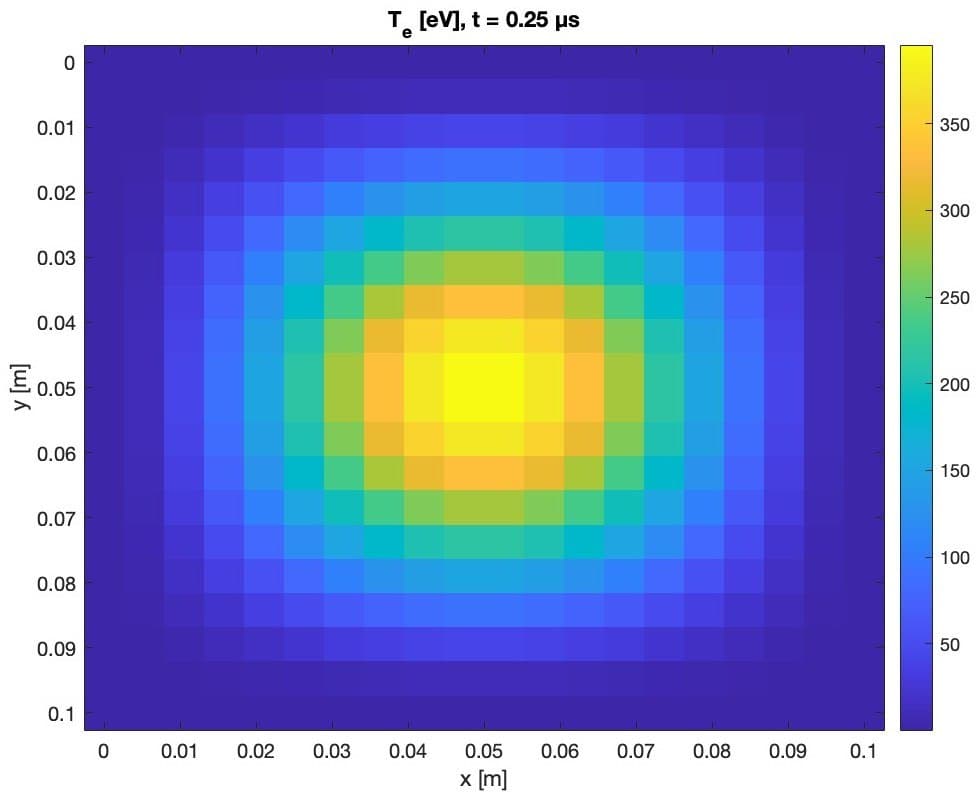
Headline results
Why plasma propulsion
Every air-breathing engine in service today — turbofan, turbojet, propeller, ramjet, scramjet — raises the thermal energy of the working fluid through combustion, converting hydrocarbon chemical energy into heat with carbon dioxide and water as byproducts. A microwave plasma jet engine proposes to reach the same end by a different route: heat ambient air electrically until it ionizes, then expand it through a nozzle. No carbon fuel, and no combustion.
This project dissects an experimental plasma jet engine built at Wuhan University to explain how it generates thrust, and builds a model of the plasma physics that makes it work. The central mechanism is collision between free electrons and neutral atmospheric particles, creating a plasma with enough thermal energy to be converted into kinetic energy through nozzle expansion.
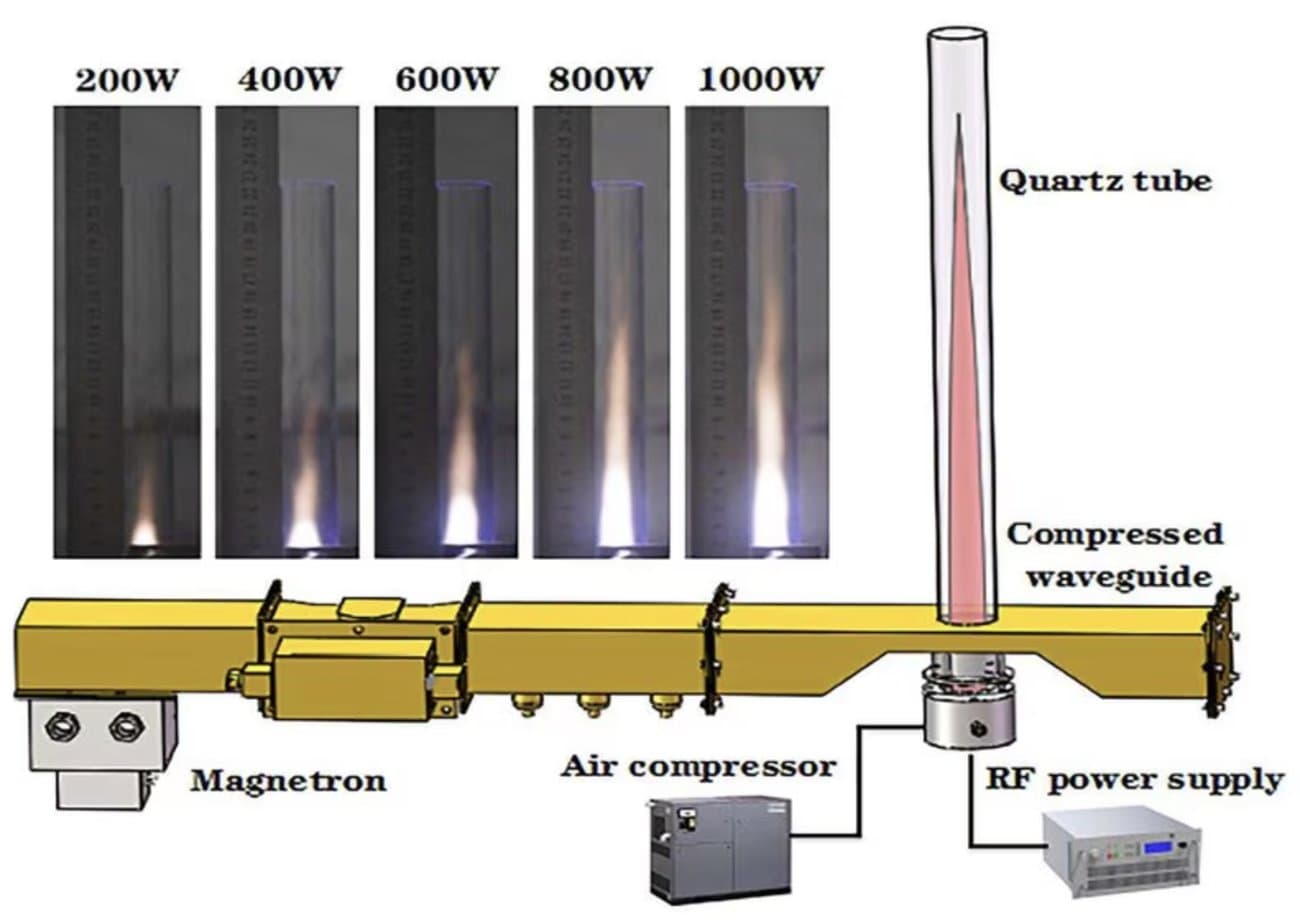
Model construction
The simulation marches a 3D finite-difference grid forward in time from the moment of ignition. Each step follows the same chain: heat the electrons with the microwave field, check whether they have reached ionization threshold, ionize if so, then feed the energy exchange back into the gas.
- 01Initialize gas properties from the standard atmosphere and the ideal gas law.
- 02Compute neutral collision cross sections from atomic radii, σ = π(2r)².
- 03Initialize microwave properties and define the electric field as a standing wave in space and time.
- 04Compute electron velocity from electron temperature.
- 05Test electron temperature against the impact-ionization thresholds for N₂ and O₂ separately.
- 06Where threshold is met, compute collision frequency and update ion and neutral densities — ions rising, neutrals falling, over the timestep.
- 07Use plasma conductivity to compute power absorbed from the microwave field, and update temperature for the next step.
- 08Record and plot the spatial variation, then repeat.
Results
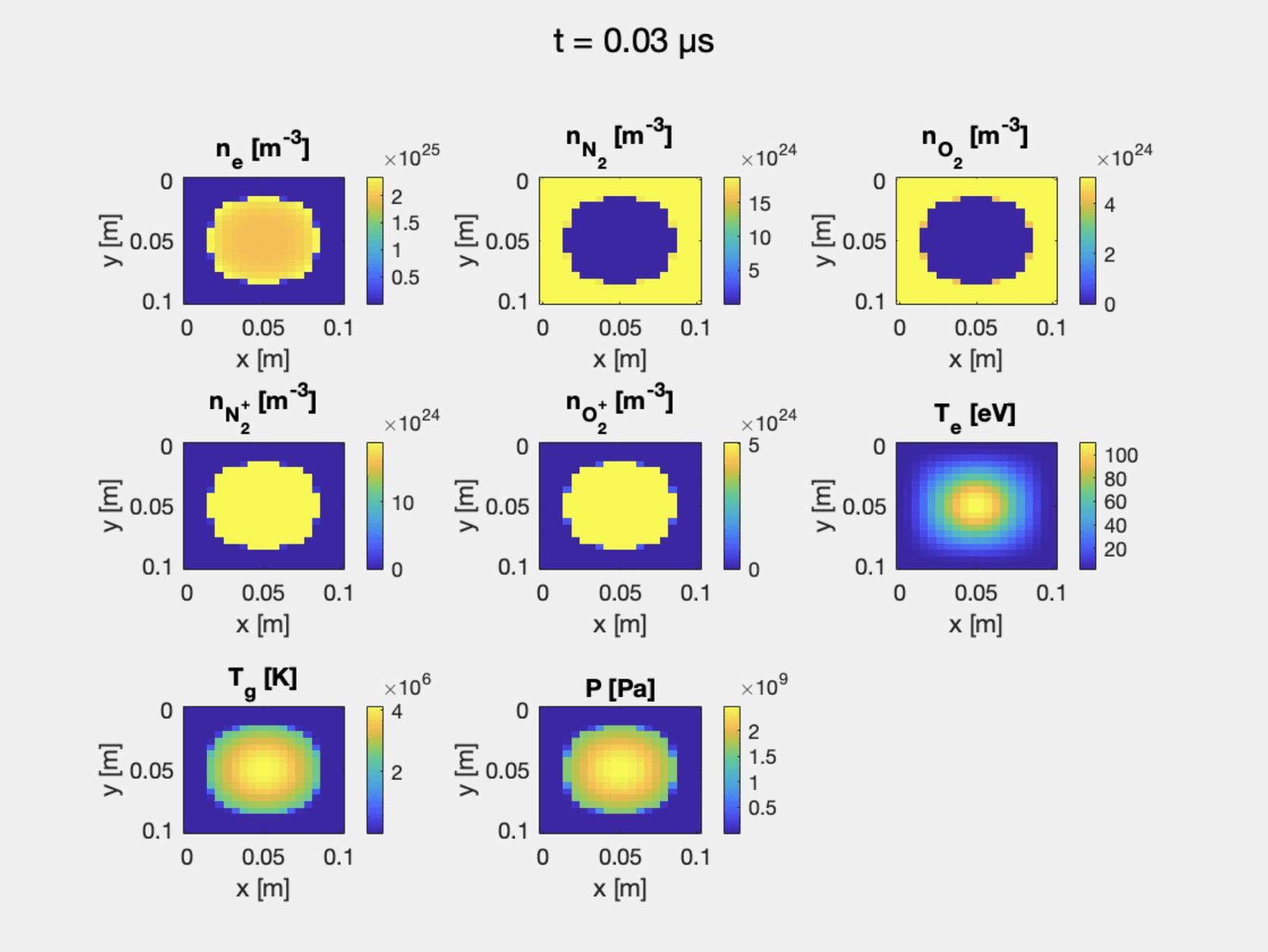
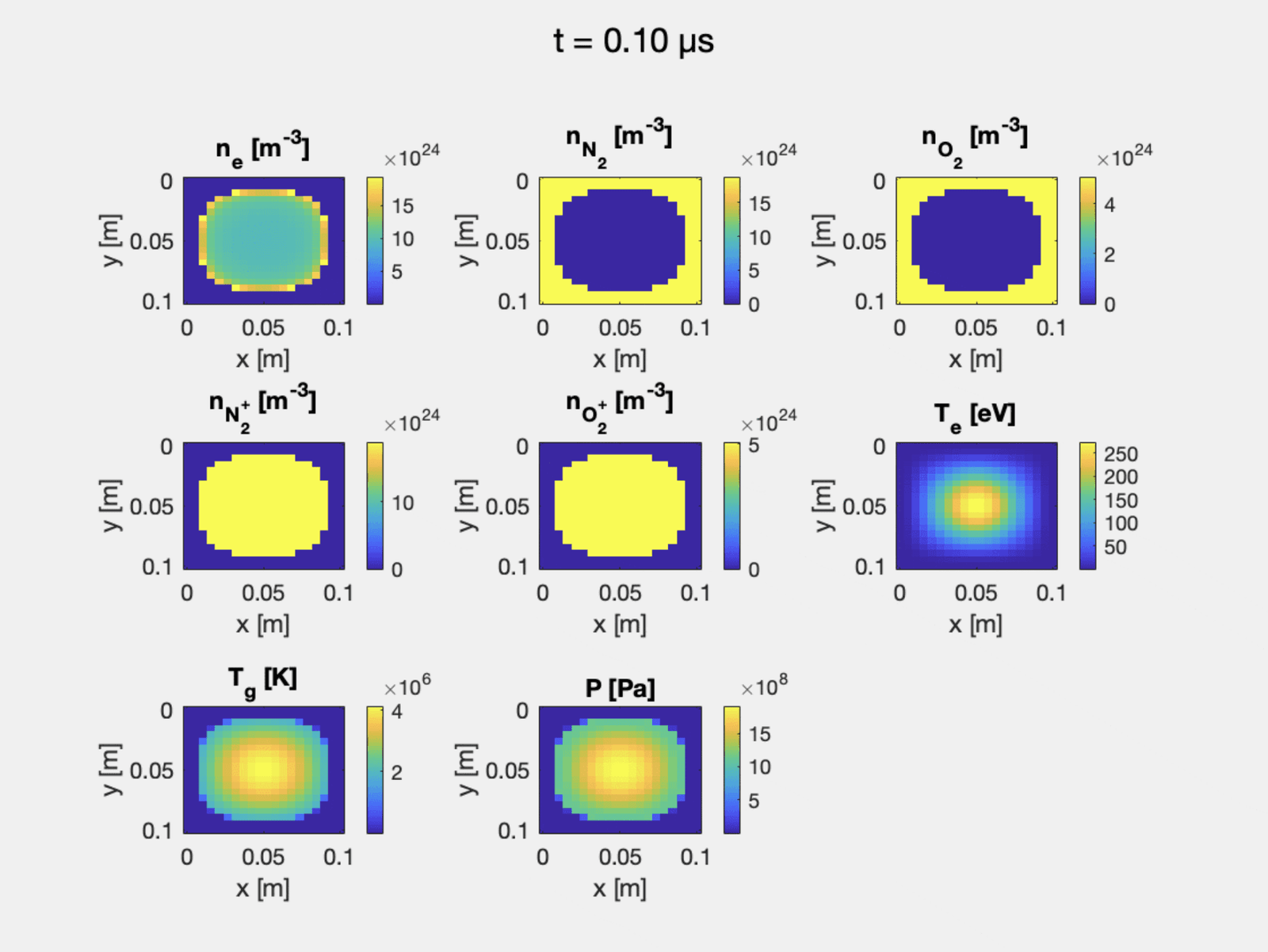
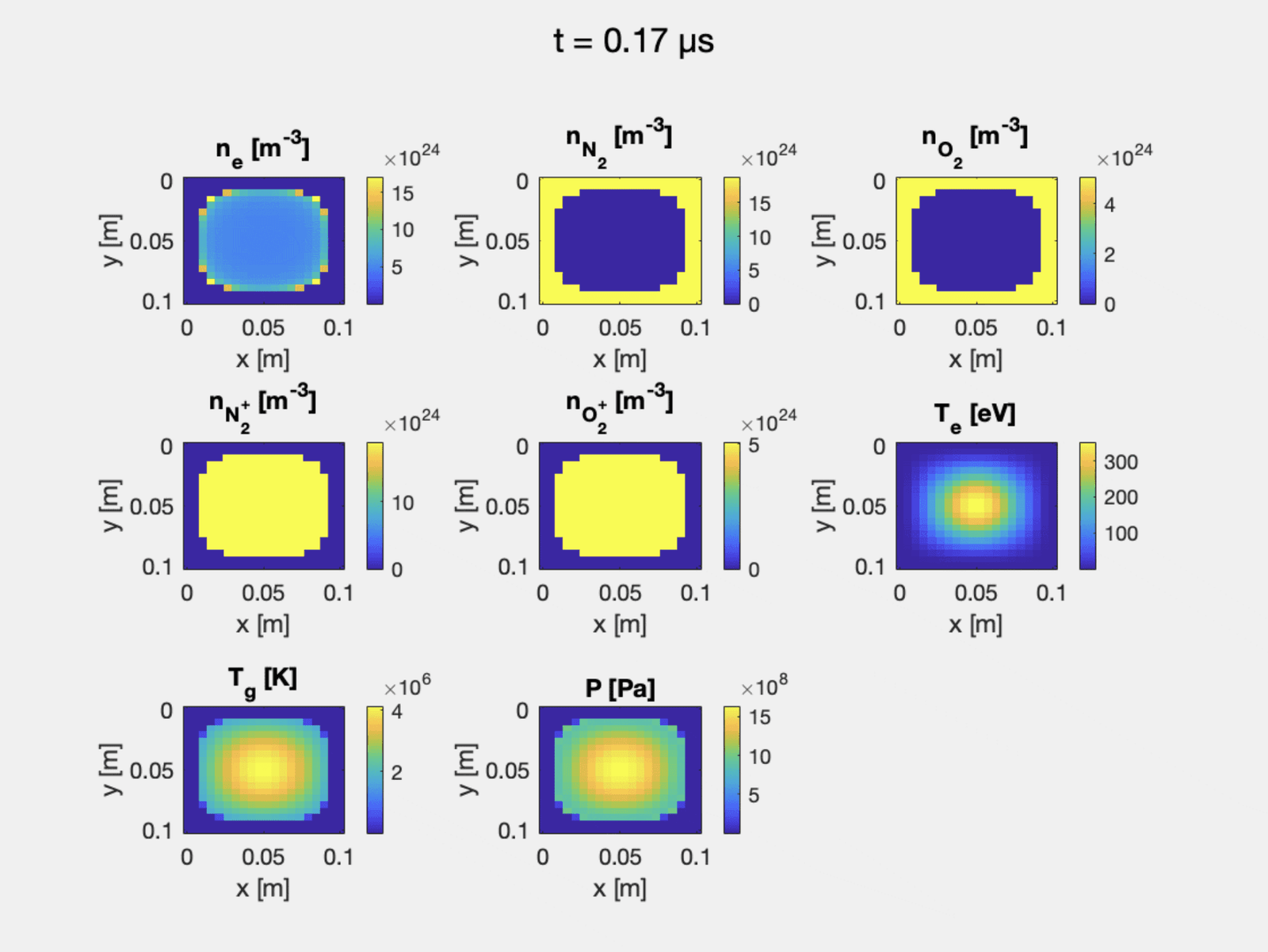
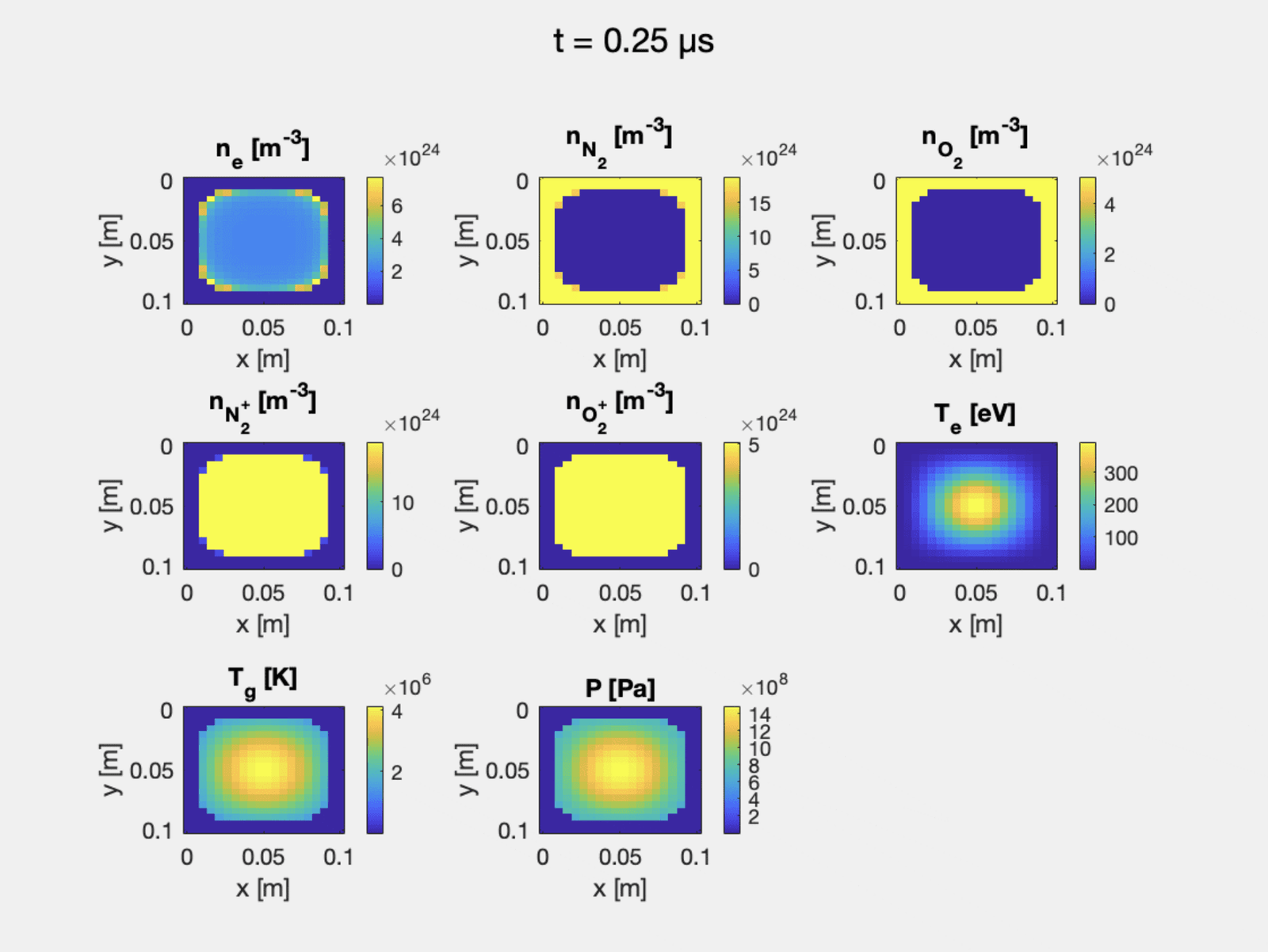
The simulation produces an animated evolution of every tracked property — electron density, neutral and ion densities for both species, electron temperature, gas temperature, and pressure — across the first 25 microseconds after ignition.
Where this leaves the concept
There is a long way to go before this architecture scales to large-aircraft propulsion, and the limiting factor is not the plasma physics — it is the electrical input required relative to the thrust generated. The mechanism works; the energy budget is the open problem.